

This month I had the pleasure and the honour to give a keynote at two European congresses. I talked about self-compassion in autism at the 14th Autism Europe Congress in Dublin, together with Wenn Lawson from Australia.
Self-compassion is linked to mental health and well-being.
Well-being of autistic individuals (and other neurodivergent people) has been my major focus the last 15 years. I try to link neuropsychological findings of (autism) research to practical tips that enhance the well-being of autistic people.
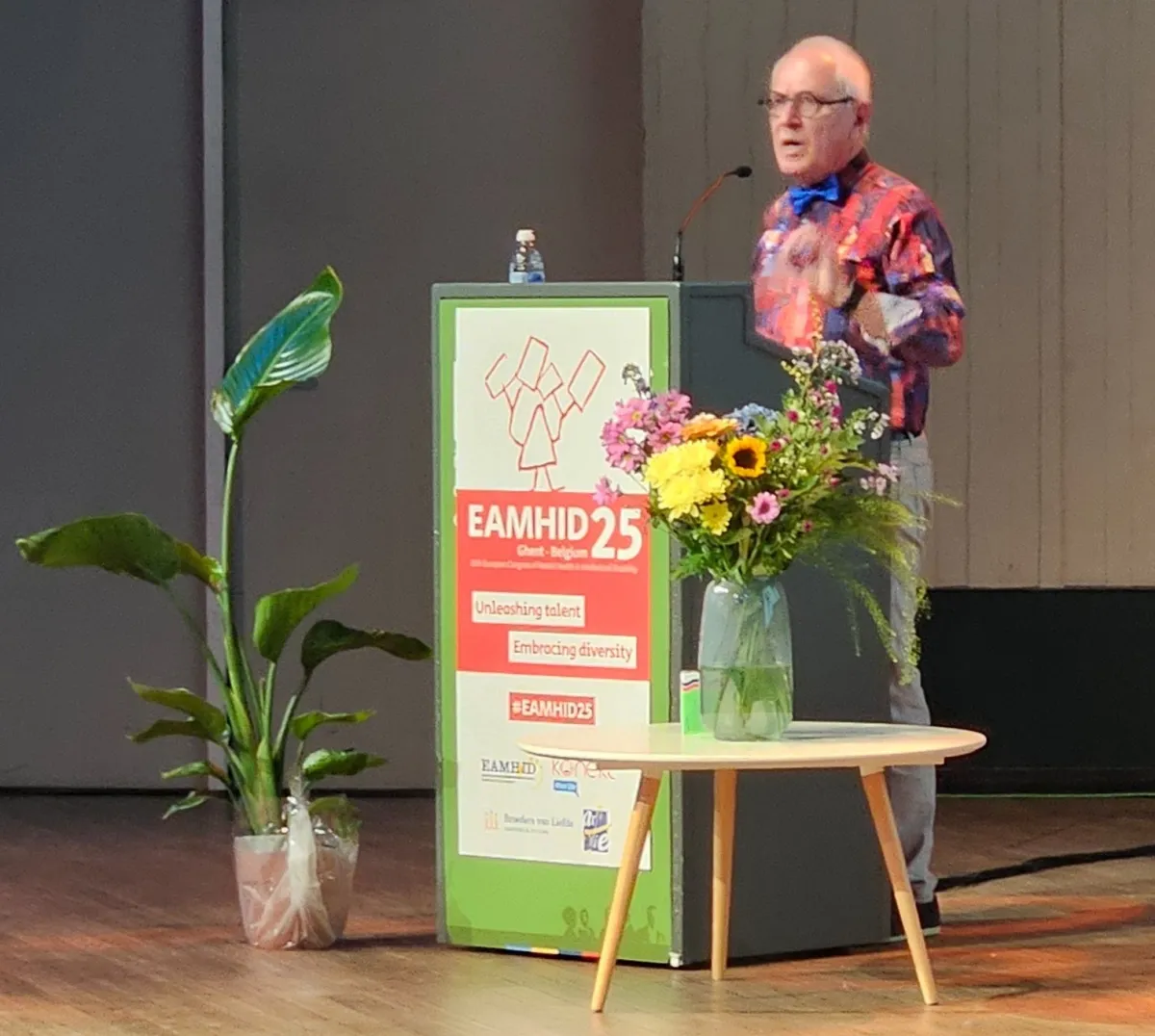
Therefore, it was a great honour to give another keynote at another European congress one week after the one in Dublin: EAMHID 2025, organized by EAMHID. This is a biennial European congress focused on unleashing talent and embracing diversity in mental health for individuals with (in particular intellectual) disabilities. My keynote “From neurodiversity to neuroharmony’ focused on the following 5 key messages:

Welke specifieke, op neuropsychologisch onderzoek gebaseerde strategieën of dagelijkse gewoontes zou je aanraden om het welzijn van autistische mensen te verbeteren, en hoe kunnen deze inzichten het beste worden vertaald naar praktische hulpmiddelen voor zowel individuen als hun ondersteuners?
see
All the strategies in the H.A.P.P.Y. programme (such as Flow activities, predictability, routines, physical excercise etc) are based on scientific studies, a.o. the predictive coding and well-being. They are made autism friendly by making the strategies very concrete, structured and predictable.
La participation à des congrès européens renforce également la crédibilité et l’impact de ce travail. Une initiative remarquable qui encourage l’inclusion, la compréhension et le respect de chacun.
Venez nous rendre visite Telkom University Jakarta